Tag Archives: food

Transcytosis – what is it, and does it matter?

In my book the Clot Thickens, and in other blogs and lectures, I have stated that LDL cannot get through the endothelium (lining of blood vessel walls) and into the artery wall behind. So, the idea of LDL leaking from the bloodstream and into the artery wall is nonsense.

Recently, however, people have been bombarding me with papers and AI generated essays, stating that there are clear mechanisms that allow this to happen. Indeed, it does happen – so they say. The primary pathway is transcytosis.

So, LDL can get into the arterial wall past the ‘barrier’ of endothelial cells, and the impenetrable tight junctions between them? Am I wrong about this?

What is transcytosis?

I probably need to begin by explaining what transcytosis is, in as few words as possible. Unfortunately, not that few. With some other background bits and pieces.

The first point I want to make is that all human cells ruthlessly control what is allowed into, and out of them. If they lose this control they will die, almost instantly. It is, pretty much the definition of cell death. This ‘substance control’ occurs all the way down to the atomic level – the smallest size possible.

By which I mean that even ions (charged atoms) such as sodium, chloride, potassium and calcium have to pass through gates, or channels, to be allowed entry or exit. This is a tightly controlled process, requiring cellular energy, and a large number of complex mechanisms, including messenger molecules. The gates/channels are embedded in the cell membrane.
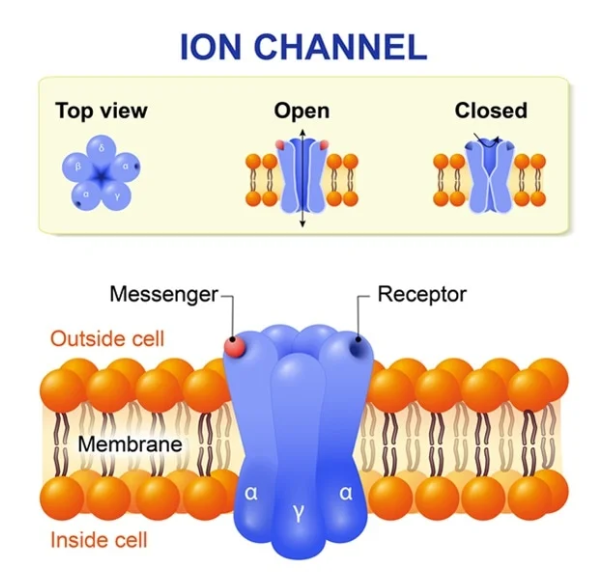
LDL molecules are thousands of times bigger than an atom. Ergo, there is simply no way they can force entry into a cell. [Terms and conditions apply, see under viruses].

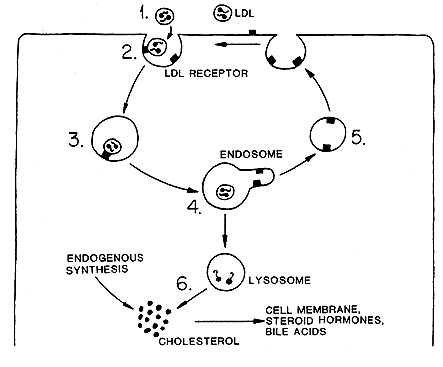
Given this, how does LDL get from the bloodstream into endothelial cells – which it clearly does? The answer is that the cell manufactures a receptor, the LDL receptor which then travels to the cell membrane – where it embeds itself, ready to grab a passing LDL. This system was first identified by Goldstein and Brown – who won the Nobel Prize for their work in this area.

How does the receptor operate? Very simply, LDL has a protein attached to the side of it, the ApoB-100 protein, which is the ‘key.’ This key is perfectly designed to fit into the LDL receptor ‘lock’. Once locked on, the LDL molecule and the receptor are then pulled into the cell through a process known as endocytosis.

In essence the cell membrane wraps round the LDL/receptor complex forming a little lipoprotein sphere. Once inside the cell, the sphere is broken apart releasing its contents – including cholesterol and fat(s). And a few other things.

The next step is that the LDL receptor itself is – often but not always – broken down by an enzyme called, – wait for it – Proprotein convertase subtilisin/kexin type 9 (PCSK9). If the receptor is not disintegrated by this enzyme, it recycles back to the cell membrane, ready to lock onto another LDL molecule.

Most cells have thousands of LDL receptors stuck to the side at any one time. So, this is not a cottage industry, it is heavy-duty manufacturing.

That is how LDL can get into a cell. Through ‘endocytosis.’ Endocytosis is the process by which cells absorb substances by engulfing them.

[Endocytosis is also, mostly, how viruses get into cells. Viruses have proteins attached to their outer casing, such as the spike protein on Sars-Cov2. If this spike can find something to lock onto – in this case the A2 receptor – it will be ‘endocytosed’ and pulled into the cell. However, if there is no lock to be found, the virus cannot enter, and you cannot be infected by that virus. Interestingly viral particles and LDL molecules are pretty much the same size].

Below is the original diagram of the LDL receptor. It does not include PCSK9, because no-one knew it existed at the time.
All of this is very widely accepted as fact – even by me.

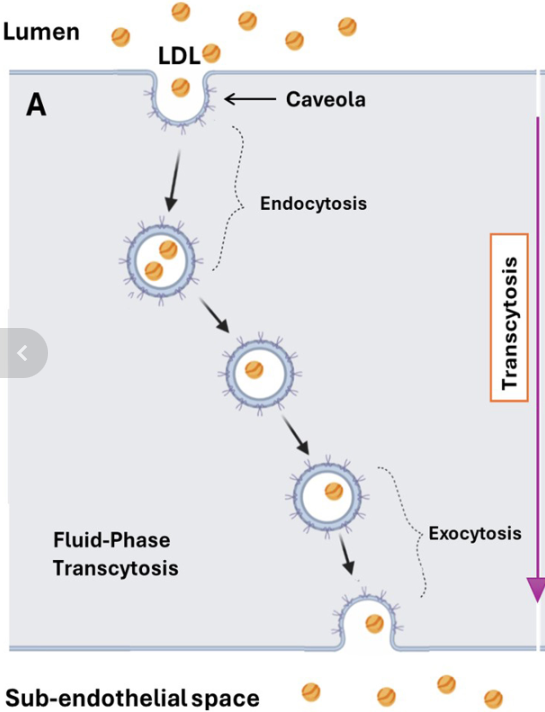
So, there is no issue with getting LDL into a cell, which is the first step in transcytosis. Can LDL then be transported across the cell and popped out the back, into the arterial wall behind, a process called ‘exocytosis’? The full mechanism of transcytosis has three parts? Entry, then transport across the cell, then exit. Endo-transexo .. cytosis.

Problems

The first point I would like to make here is one of scale. If you were the size of an LDL molecule, the cell would be two kilometres across – approximately. Therefore, LDL is not going to simply drift from one side to the other, then bump into the cell membrane on the other side. Well, it might, but it would take a hell of a long time to do so.

Instead, it needs to be actively transported through the cell – in some way. Which means that, for transcytosis to work, the cell needs to have complex mechanisms within it designed to take LDL by the hand and lead it through the cell. Then exocytose it out the back. This is not some random – a million chimps writing Shakespeare – type of thing.

In super-simplified diagrammatic version, it would look something like this:
It is true that cells do possess mechanisms that enable them to transport various molecules from one side to the other. Then pop them out the back. Although, with LDL, the ‘how’ remains unclear, and vague. And the ‘why’ is even more uncertain.

As in, why would an endothelial cell go to all the trouble of absorbing an LDL molecule – then decide not to break it down – then transport it across itself before popping it into the sub-endothelial space behind? [A very narrow fluid filled space]

The only reason for this must be that the cells behind, in the deeper layers of the arterial wall, need cholesterol, and require it to be passed on to them. How would they communicate this need to the endothelial cell?

Well, for this to happen the cells in the arterial wall would need to synthesize a messenger molecule that travels through their cell membrane – then crosses the subendothelial space to lock onto a receptor on the outside of the endothelial cell membrane facing the arterial wall.

This would trigger another messenger molecule to say that the cells behind need LDL. So, could you please not break down all the LDL molecules you absorb and send them through to us instead. Yes, indeed, it’s a bit of a long and complicated message, but it could happen. The body acts in mysterious ways, its wonders to perform. Or something like that.

You may choose to believe that all such mechanisms, and messenger molecules, and the receptors for said molecules to lock onto exist, and have been fully identified … and have been seen operating in vivo. Or you may not.

But you can hopefully understand that we are not talking about some passive, ‘LDL moving down a concentration gradient from blood to arterial wall thing’ here. Sailing happily from the bloodstream directly into the arterial wall. You may also see why I am highly sceptical about all of this. Primarily, because it does not make any sense at all [see under vasa vasorum, discussed later].

Why so much recent focus on transcytosis?

Transcytosis has become an area of much research, and comment, recently. Why? Well, I like to think I may have been the cause of some of it. For I have stated in books, lectures, and writing that LDL cannot simply slip through – or past – the endothelial barrier. Thus, LDL cannot passively leak into the arterial wall, causing plaques. Ergo, the LDL hypothesis is wrong.

My position on this is, I believe, based on rock-solid logic. If LDL cannot navigate a way through undamaged endothelial cells, and the tight junctions that bind endothelial such cells together, then LDL cannot be the proximate cause of plaque development. Because it cannot get into the arterial wall to start creating a plaque in the first place.

I think this has, finally, been recognized as being a rather major obstacle to the LDL hypothesis. Whether through my work and writings, or for other reasons. Whichever, it now seems to have become more widely accepted that the concept of LDL travelling down a concentration gradient is scientific nonsense. And always has been. Sigh … head hits desk

Just to start with, a concentration gradient simply cannot shift things out of the bloodstream and into any cell. Because, sitting between the blood, and any cell, is a cell membrane. And, apart from anything else, you cannot have a concentration gradient between two ‘fluids’ if there is a solid barrier lying between them. No ‘gradient’ exists unless the barrier breaks down. Then things can travel about.

More relevant is the fact that cells are perfectly capable of shifting molecules up – against any ‘theoretical’ concentration gradient. They do this all day, every day. In fact, they do this millions of times a day. If this didn’t happen, we would cease to exist. Your heart would instantly stop beating, for example.

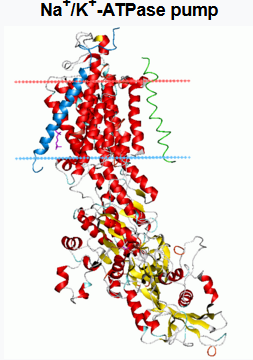
Here, from Wikipedia, is a short explanation of the sodium-potassium pump – which pumps sodium out of cells, and potassium in:

‘The sodium–potassium pump also known as Na+/K+-ATPaseNa+/K+ pump, or sodium–potassium ATPase) is a found in the cell membrane of all animal cells. It performs several functions in cell physiology.

The Na+/K+-ATPase enzyme is active (i.e. it uses energy from ATP) For every ATP molecule that the pump uses, three sodium ions are exported and two potassium ions are imported. Thus, there is a net export of a single positive charge per pump cycle. The net effect is an extracellular (outside the cell) concentration of sodium ions which is 5 times the intracellular (inside the cell) concentration, and an intracellular concentration of potassium ions which is 30 times the extracellular concentration.’

Yes, cells can pump potassium ions out and into the blood, or elsewhere, ‘against’ a massive concentration differential. And the potassium ions do not simply leak back in again, because they can’t. Because the cell membrane acts as a barrier to re-entry.

And just to boggle your mind a bit more there can be, up to, thirty million sodium-potassium pumps on an individual cell. [Nerve cells have the most, it’s how they pass electrical messages].
And an average endothelial cell will have around forty thousand LDL receptors on its surface. Which may give you some idea of how vital cholesterol is for healthy cellular function.

The point I am trying to emphasize here, perhaps over-emphasize, is that hundreds of different molecules move in and out of cells, under the control of complex cellular processes, requiring receptors and messenger molecules Nothing happens here that is not tightly controlled. And I mean nothing – viruses aside.

For many years there has been a horribly lazy assumption that, if the LDL concentration in the blood is high, it will simply move out of the bloodstream into the artery wall. Straight though the endothelial barrier.

Rather belatedly it has become more widely accepted that for the LDL hypothesis to work, there must complex mechanisms in place to allow LDL to travel though endothelial cells and into the ‘sub-endothelial’ space behind. And then get taken up into the arterial wall – in some mysterious way.

And lo, it seems, we now find that these mechanisms exist. Or do they? Small parts of the mechanism have been proven to exist, in some cells. As for the whole linked together system … nope. Not even close.

Some real-world stuff – PCSK9 Inhibitors and the vasa vasorum

PCSK9 Inhibitors

I hope to have made clear there are many (theoretical) areas where the transcytosis conjecture falls to bits. What about in the real world? For now, I am only going to look at two issues. I may look at others a bit later.

The newest LDL lowering drugs to hit the market are PCSK9 inhibitors. The thinking behind them is that, if you can block PCSK9, then fewer LDL receptors will be broken down. Therefore, more receptors will travel back to the cell membrane, more LDL will be absorbed by cells, and the LDL level will fall – thus reducing the risk of cardiovascular disease.

These wonder drugs include:

  • Evolucamab (Repatha)
  • Alirocumab (Praluent)
  • Inclisiran (Leqvio)

It is true that they can reduce LDL in the bloodstream by, well over, fifty per cent. A much greater reduction than can be achieved with statins.  But you may have just spotted a problem with the logic.

If more LDL is taken up by endothelial cells, then (if the transcytosis argument is correct) more ‘non-broken-down LDL’ will be available to be transported into the arterial wall behind – to form plaques. Ergo, you will be increasing the risk of cardiovascular disease, not reducing it.

So, do they work, or not? Well, I have looked at the studies and whilst they do not significantly increase the risk of cardiovascular disease, they have spectacularly failed to show much benefit. Here from a review of the FOURIER trial.

‘After readjudication, deaths of cardiac origin were numerically higher in the evolocumab group than in the placebo group in the FOURIER trial, suggesting possible cardiac harm.’ 1

Yes, reducing PCKS9 levels is amazingly effective at lowering of LDL, whilst slightly increased risk of cardiovascular death. Transcytosis argument proven, or disproved? I think disproved.

Perhaps more important, if not directly related to this discussion, is that they just managed to spectacularly disprove the LDL hypothesis. Sixty per cent lower LDL leading to an increased rate of cardiovascular deaths. Moving on.

The vasa vasorum

All arteries, of the size where plaques develop, have their own blood vessels lying within called vasa vasorum (blood vessels of the blood vessels). They supply nutrients to the arterial wall. It is their role in life.

Or, to look at this in another way, the cells in the arterial wall do not require access to the nutrients in the bloodstream that flow through the artery. If they need cholesterol from LDL molecules, for example, they can get it. Because it is travelling all around them in very small blood vessels which are purely designed to provide all the things the cells within arteries need.
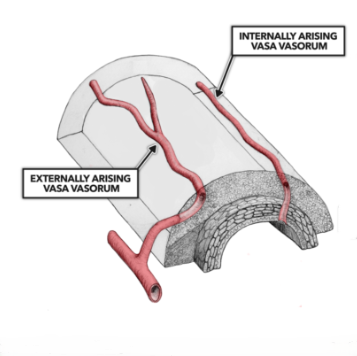
Yes, these vasa vasorum are lined with endothelial cells – as are all blood vessels. However, at the smallest ‘capillary’ size blood vessels the endothelium does not act as a barrier. They are, usually, leaky, and made deliberately so. Because, once blood arrives at its final destination substances have to be able move in and out of the blood freely.

Blood arriving at the kidneys, for example, has to unload waste products into each nephron – for ejection in the urine. Or the kidneys won’t work. And blood vessels in the liver are equally leaky.

In fact, just to complicate things further, there are three different versions of capillaries [smallest blood vessels in the body]..

Continuous, where the endothelial cells are tightly bound together – and wrap back onto themselves. In addition, the basement membrane supporting them is also continuous. Continuous capillaries retain control of the passage of all molecules. They are found, mainly, in the brain, and this structure creates the blood brain barrier.

Then there are fenestrated capillaries, with small holes in the endothelium.

Finally, there are sinusoidal capillaries. These are very leaky, and are found within the vasa vasorum.
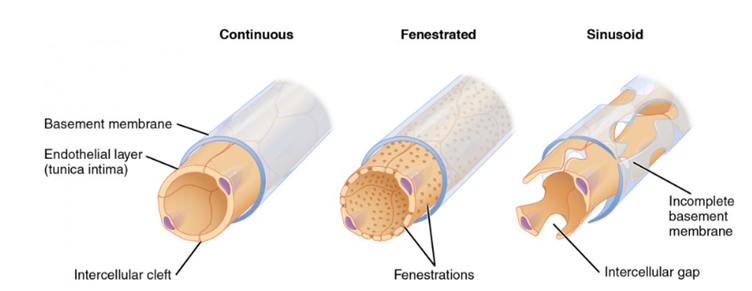
At this point, to my mind, the entire transcytosis argument becomes pretty much irrelevant. Why?  Because LDL can get into the artery wall any time it likes, via the vasa vasorum. There is no barrier here. Entry by the back door, if you like.

So why have we become tangled up with complex arguments on transcytosis? If f there is a simple way that LDL can enter the artery wall any time it likes?

Because gentle reader, veins have more vasa vasorum than arteries. So, LDL can enter vein walls with even greater ease than artery walls. In addition the blood vessels in the lungs (pulmonary vessels) also have vasa vasorum.

And yet …

Plaques do not (except in exceptional circumstances) develop in veins or pulmonary blood vessels. I would say never, ever, but it can happen with, for example, Eisenmenger’s syndrome. [Very high blood pressure in the lungs].

All of this leaves the LDL hypothesis with a logical chasm to bridge. Starting with the first issue:

Why would LDL transcytosing into artery walls cause atherosclerotic plaques to develop, when LDL transcytosing into vein walls, and pulmonary arteries, does not?

Just in case you are wondering, the LDL level in veins is significantly higher than in arteries:

‘The present study’s main finding is that all lipoproteins are found in lower amounts in aortic blood when compared with peripheral venous blood’ 2

The ultimate ad-hoc hypothesis

I may seem to have come an awful long way to simply wrap back round on myself, and dismiss the entire concept. But transcytosis is presented in such a ‘clever’ way that it sounds entirely plausible. It is also made to sound difficult, and virtually incomprehensible. How can you argue against something that you do not understand? The fear of sounding stupid looms large.

The reality is that transcytosis sprang to life as an ad-hoc hypothesis. Here I quote AI on the matter of such hypotheses:

An ad hoc hypothesis is a provisional explanation or supplementary assumption added to a theory specifically to save it from being disproven or falsified by new, conflicting evidence.

Key Characteristics

  • Crisis-Driven: It is invented to explain an anomaly that the original theory failed to anticipate.
  • Lacks Independent Testability: It usually cannot be tested or verified on its own; its only evidence is the problem it attempts to excuse.
  • No Predictive Value: It does not lead to new discoveries or broader scientific understanding

Transcytosis may seem, superficially, to provide an answer to the question ‘how can LDL move from the bloodstream into the artery wall – though an impenetrable barrier, and thus cause plaques.’  It happens by transcytosis. Phew, the LDL hypothesis is still correct.

But:

  • LDL can get into the artery wall via vasa vasorum
  • Thus, it can also get into vein walls and pulmonary vessel walls in the same way
  • So, why does LDL not cause plaques in these blood vessels?

Which leads us back, as always, to the same, critical question. What is different about arteries in the systemic circulation* that makes them prone to develop plaques, when the same level of LDL has no such effect on, or in, any other vessels?

*The systemic circulation means blood leaving the left ventricle, before travelling round the body and arriving back at the right atrium. From where it is pumped into the right ventricle and then goes into the lungs, before arriving back at the right atrium – the pulmonary circulation.

As I hope you can see, invoking transcytosis to explain anything gets you nowhere, as all the blood vessels, large enough to develop plaques, have vasa vasorum in them that allow free passage of LDL.

Next ad-hoc hypothesis will be, I guess: “Why transcytosis only happens in arteries – at the exact point where plaques develop”.

Anyway, I do hope you have learnt something new. You may wish to explore what I have written in more detail. You may want to attack my reasoning. I welcome that. One of the main problems in science nowadays is that no-one debates anything.

1: https://bmjopen.bmj.com/content/12/12/e060172

2: https://pmc.ncbi.nlm.nih.gov/articles/PMC10352005/

The latest Lancet paper on adverse effects – part two

Under-reporting or over-reporting?

I am going to start part two by looking at the evidence for statins causing ‘non-imagined’ adverse effects. Or, to put it another way, real effects. My own view on this is that the adverse effects of statins are significantly under-reported. Mainly because patients often don’t associate the drug with the problem. Such as muscle pain or weakness. This is especially true if it takes weeks or months for problems to develop. In some cases, even years.

Even if patients do report symptoms, doctors do not record many, if any, of the adverse effects. Which is true of all drugs, not just statins. The US does have an adverse drug reaction reporting system. But less than 1% of adverse reactions are captured by it 1:

As the article confirms: ‘Underreporting significantly delays the dissemination of critical information about such reactions.’ You don’t say.

In the UK, we have a yellow card system, specifically designed to make it a complete pain to report any problems. If you do fill in a yellow card, you find yourself bombarded with requests for masses of additional information. Past medical history, drug history, days and dates of starting the medication, exact adverse effect, lab tests etc. etc. This can all take many, many, unpaid, hours to gather. Which means that doctors rarely bother to use the system, and patients have never even heard of it.

The issues of adverse effect reporting has many other complexities. A few years ago, an interesting study caught my eye. It was not large, but telling. I have not seen the same research done, before or since. I may have missed it. It can be tricky to keep up with all the research done. Seventy-five patients were taking blood pressure lowering tablets – anti-hypertensives. They were asked the following questions:

  1. Did their quality of life improve on medication?
  2. Did it stay the same?
  3. Did it get worse?

Two other groups, the patient’s doctor, and the patient’s closest relative/partner were asked the same questions … about the person taking the tablets.

A little background. High blood pressure causes no symptoms. Because of this, hypertension is often referred to as the ‘silent killer’. Anti-hypertensives, on the other hand, are well known for causing a number of unpleasant effects. Therefore, you would probably expect that taking anti-hypertensives would have a negative effect on quality of life. Or, at best, it would remain about the same. Here is how the three groups answered.

Doctors:                      Quality of life improved:                                  100% agreed

Patients:                      Quality of life improved:                                  50% agreed

Patient’s relatives:      Quality of life improved:                                  0% agreed

Possibly most telling is that seventy-four out of seventy-five of the patient’s relatives reported that the quality of life worsened 2. What can we learn from this? Well, I might start by giving the doctors involved a good slap. I wouldn’t learn anything, but it might be a good lesson in humility for them. ‘Stop seeing what you want to see, and start seeing what is.’

The point here is that if there is a significant bias in the reporting of adverse effects, the bias is heavily weighted towards not reporting them. Not by patients, and certainly not by the doctors – remember that 1% figure. Which means that nothing is recorded for posterity. See no evil, hear no evil, speak no evil.

Another issue in play here, specifically, is that the authors of the Lancet paper do not appear to have heard of the placebo effect:

The placebo effect is a phenomenon where a person’s physical or mental health improves after receiving an inert, “dummy” treatment (like a sugar pill or saline injection). Triggered by the belief in, and expectation of, improvement, the brain induces real, measurable physiological changes—such as releasing endorphins or dopamine—that reduce symptoms like pain, fatigue, and anxiety.

One of the main reasons why we have such massive, complex, double-blind placebo-controlled trials is precisely because of the placebo effect. The drug could initially appear brilliant, but it may be achieving nothing; it may be that the ‘placebo effect’ is doing the heavy lifting.

Because of this significant ‘confounding factor’ clinical trials need to be ‘controlled’ by giving everyone a pill, or an injection. A percentage get the active drug, the rest get the dummy placebo. It is a major reason why clinical trials are so huge, complex, and costly.

However, the impact of taking an unknown ‘placebo’ is far less than being handed a real tablet by a doctor. Who will likely inform you, with great enthusiasm, that it is going to do you good 3. Especially if they add, as they do with statins. ‘And it will stop you dying from heart disease.’ Or words to that effect. [And if you dare stop taking it, you will die].

Strangely, it appears to have escaped the attention of the CTT in Oxford that there is such a thing as the placebo effect. For them, the only bias that exists with statins is that you read about nasty effects, then suffer from them. The Nocebo effect. Why did they not mention the placebo effect? Which does the exact opposite – far more powerfully. I leave it to you, dear reader, to decide on that matter.

Some evidence of causality

It is very difficult to know what the true rate of adverse effects with statins may be. So much heat, so very little light. I cannot possibly cover all adverse effects in this blog. Instead, I will focus primarily on muscle pain and damage. This is probably the most common problem, and the most easily explained and understood.

I want to make it exceedingly clear that, far from being an imagined problem, we have a well-established biochemical pathway that directly links from statins to muscle damage, pain and weakness. With all steps proven, multiple times, in multiple studies.

In its simplest form, the pathway goes like this. Statins block an enzyme known as HMG-CoA reductase. This inhibits an early step in the long and complex – thirty-six step process – that ends up with the synthesis of cholesterol. This mainly takes place in the liver, which synthesizes around five grams of cholesterol, per day. About twenty eggs worth.

However, if you block HMG-CoA reductase this is not the only pathway you inhibit. You are also blocking the production of many other highly important compounds at the same time. You can perhaps think of cholesterol synthesis as a tree that grows from the ‘root’ of a chemical compound called Acetyl CoA.

As the chemical reaction ‘tree trunk’ grows upwards it starts to branch out, leading to the creation of many other, vital, substances. Such as dolichols, Heme A, prenylated proteins, co-enzyme Q10 etc, etc. Don’t worry there won’t be a test at the end.

Forgetting the others, important though they are, I will focus on Co-enzyme Q10 here. Which is also known as ubiquinone. This co-enzyme is critical in the synthesis of Adenosine Triphosphate (ATP). This molecule is, in turn, the power source that drives everything in our bodies. When ATP is broken down to ADP, energy is created, and used. This is how we work. From ‘professor’ Wikipedia:

‘ATP (adenosine triphosphate) is the primary energy carrier and “molecular currency” of the cell, storing and transferring energy to power essential processes like muscle contraction, nerve impulses, chemical synthesis, and active transport.’

You could think of ATP as the fuel in our car, or the battery in an EV. ATP doesn’t’ last long, and is being constantly replenished within the mitochondria – the little energy factories that live inside our cells. But without ATP, everything stops, and you die.

So, you could say it is kind of important. And, yes, statins have a significant and detrimental effect on the production of coenzyme Q10 (CoQ10), and then on ATP production. If you want some ‘real’ boring science about what this does. Read this paper:

‘Simvastatin impairs ADP-stimulated respiration and increases mitochondrial oxidative stress in primary human skeletal myotubes 4.’

‘These data demonstrate that simvastatin induces myotube atrophy and cell loss associated with impaired ADP-stimulated maximal mitochondrial respiratory capacity, mitochondrial oxidative stress, and apoptosis (death) in primary human skeletal myotubes, suggesting that mitochondrial dysfunction may underlie human statin-induced myopathy (muscle damage and pain).’

Paper highlights – taken from the paper itself:

  • Statins can induce muscle weakness/myopathy.
  • In culture, simvastatin induced dose dependent atrophy of human myotubes.
  • Statin exposure decreased mitochondrial respiratory function and increased ROS (reactive oxygen species…ROS = ’bad’) production.
  • Activation of apoptosis (muscle cell death) also evident.
  • Findings suggest mitochondrial dysfunction underlies statin-induced myopathy.

It all sounds pretty damned unpleasant, does it not. The primary problem is that, without sufficient CoQ10 mitochondria cannot make enough ATP. This, in turn, ‘impairs ADP-stimulated respiration’ which leads to mitochondrial dysfunction then activation of apoptosis. Apoptosis means cell death.

In short. If the mitochondria can’t make enough ATP, the cell does not have enough ATP/energy to survive, and may commit suicide. Which is what ‘activation of apoptosis’ means.

You think the pharmaceutical companies didn’t notice this… this (imaginary) muscle cell destruction and death? Of course they did. They may be many things, most of which are far too rude to print here, but they are very good at science, and they certainly do notice stuff.

They knew very early on that statins block CoQ10 synthesis, and then ATP synthesis. Not entirely, but up to a fifty per-cent reduction. At one point it looked as if this could be such a significant problem that Merck took out two patents outlining how to neutralise it. The first was US4933165A:

Key Aspects of US4933165A

  • Assignee: Merck & Co., Inc.
  • Inventor: Michael S. Brown (Note: The patent is often associated with the work of Dr. Karl Folkers regarding CoQ10, though the listed assignee in the 1990 publication is Merck).
  • Purpose: The invention describes a method for reducing the side effects of HMG-CoA reductase inhibitors (statins) by combining them with Coenzyme Q10.
  • Mechanism: Statins work by blocking the HMG-CoA reductase pathway. This same pathway is used by the body to produce CoQ10. The patent addresses the depletion of CoQ10 caused by statins, which can lead to muscle pain (myopathy) and potential heart damage.
  • Scope: The patent covers the combination of CoQ10 with various statins, including lovastatin, simvastatin, and pravastatin.

They didn’t act on this patent. Perhaps it wasn’t seen as a great sales idea to stuff the antidote into the same packet as the statin. ‘These are perfectly safe, you say. So, what it this other tablet here for – precisely?

One man who did take out a patent with regard to the muscle damage caused by statins was none other then Professor Sir Rory Collins himself, in 2009.

A leading Oxford medical researcher who says statins are safe is at loggerheads with a company that makes “misleading” claims about the drugs’ side effects to sell a diagnostic test he invented.

More than 6m people take statins — drugs which reduce cholesterol and save an estimated 7,000 lives a year — but there is a fierce debate about the benefits and side effects.

Sir Rory Collins, a professor of medicine and epidemiology at Oxford University, led a review into statins, published in The Lancet earlier this month, which found that not more than one in 50 people will suffer side effects.

Collins, who believes millions more Britons could benefit by taking statins, is also co-inventor of a test that indicates susceptibility to muscle pain from them.

In 2009, he and three co- inventors filed the patent for a genetic marker that identifies patients at increased risk of myopathy (muscular pain). The patent says the incidence of myopathy is around one in 10,000 patients per year on a standard statin dose*.

The test, branded as Statin–Smart, is sold online for $99 (£76) on a website that claims 29% of statin users will suffer muscle pain, weakness or cramps. The marketing material also claims that 58% of patients on statins stop taking them within a year, mostly because of muscle pain.

Oxford University said Collins had raised his concerns “several times” about “misleading” marketing claims made by Boston Heart Diagnostics, the American company granted the exclusive licence for Collins’s patent by the university5. [Lois Rogers was health editor for the Sunday Times].

*Muscle pain and myopathy are not quite the same thing. Myopathy is a serious adverse effect – assocatied with a significant rise in an enzyme called creatine kinase (CK). When muscles are damaged and/or, die they – usually – release enzymes, with CK being the main one. Myopathy can be the precursor to rhabdomyolysis (very widespread muscle death) which has an extremely high fatality rate. And yes, all statins can cause rhabdomyolysis – albeit rarely.

I think of it this way, as a spectrum.

Muscle pain                =          Moderate muscle damage/death ± moderate rise in CK

Myopathy                    =          Severe muscle damage (often, not always, a rise in CK)

Rhabdomyolysis          =         Catastrophic muscle damage, CK through the roof

Myopathy may be considered relatively rare 1:10,000 per year (according to Collins). But the diagnosis is not straightforward, and it is heavily reliant on the finding of raised CK levels. But…here is a small study looking at patients with severe myopathy, and no rise in CK. ‘Statin-associated myopathy with normal creatine kinase levels.’

‘Four patients with muscle symptoms that developed during statin therapy and reversed during placebo use… Muscle biopsies showed evidence of mitochondrial dysfunction…These findings reversed in the three patients who had repeated biopsy when they were not receiving statins. Creatine kinase levels were normal in all four patients despite the presence of significant myopathy 6.’

So, we have a condition that is considered rare … but which may not be as rare as you think it is. Because you are relying on a blood test that may, or may not, actually diagnose it. You may get a lot of false negative tests. [A test which says you do not have a condition, when you do]. And when does muscle pain transform into myopathy? It is arbitrary.

Enough of this, I think.

What do we now know? We know that statins block CoQ10 production, and this reduces the amount of ATP being manufactured by the mitochondria – by up to fifty per cent. This is a well-researched, and inarguable, scientific fact. It will be a particularly significant problem in cells that have a high energy requirement e.g. skeletal muscle, or heart muscle, or neurones.

In truth, the adverse effect issue mainly boils down to this. Do you have the reserves to overcome the mitochondrial damage that statin cause … or not. If you do have the reserves, you may not notice much, if anything. If you don’t, you could end up stuck in a chair, hardly, able to rise. Which I have seen happen to several patients. And my father-in-law. An early statin user.

One lady I was looking after in an elderly care unit was judged to be so physically and mentally incapacitated that she was going to be admitted to a nursing home with frailty and dementia. I stopped the statins, and she walked out of the unit two weeks later, bright as a button. The nurses were stunned. I got a letter from her GP a week later, condemning me for stopping her life saving medication. That was just one of many patients where I had very similar results. She was just the most dramatic.

Do I have other terrible tales about statins? Of course. I recall another lady with such severe abdominal pain that she ended up having a laparoscopy (sticking a camera into the abdominal cavity to have a look around). Nothing was found, a mystery. She stopped the statin, on my recommendation, and the pain went away. Completely and forever.

Yes, I am biased, yes these are ‘anecdotes’, easily dismissed – and, boy, they will be. But I have seen so very many. Far more cases of rhabdomyolysis, for example, than I should ever have seen in my career …statistically.  And so many more have written to me, telling me how they have suffered, and then been dismissed by their own doctors.

Here is one such. I could dredge up a thousand more, given a couple of days.

‘Thank you, Dr. Kendrick. I am one of the many unfortunates who suffered permanent muscle damage from a needless prescription of simvastatin from 2008 to 2012. No monitoring, but my CK reading of 20 x normal was discovered by chance and the alarm was raised. When referred to NHS specialists their attitude was very strange, complete denial and hostility. Now permanently disabled on the right side of my body.’ Georgina H (Reproduced with consent).

Before I finish this blog. I would like to return to my court case, and all the interesting documents that emerged, blinking into the light. Barney Calman was the Health Editor of the Mail on Sunday which ran the defamatory article against me. He put out a call for case histories from people who had stopped taking statins, then suffered a major event e.g. heart attack, or stroke, or suchlike. What he got was the following:

From: Barney Calman Sent: Tue, 26 Feb 2019 08:44:40 +0000From: “Barney Calman” To: “Fiona Fox” , “Rory Collins” , “Colin Baigent” , “samanin@bhf.org.uk” , “Sever, Peter S” , “Liam Smeeth” CC: “Greg Jones” Thread To: Fiona Fox Rory Collins Cc: Greg Jones Sensitivity: Normal Colin Baigent samanin@bhf.org.uk Sever, Peter S Liam Smeeth

‘Dear all, thank you again for all your input into this article so far. I wanted to readdress the issue of finding a case study. One of the key factors in your collective argument is that criticism of statins discourages use amongst high-risk patients, and this is a public health threat. Since putting calls out we have been inundated by stories of people who have stopped taking statins and felt far healthier.

We’ve had two quite dramatic stories of patients who have been taken off statins by their doctors because of developing serious liver problems, and then died. The families themselves both naturally question whether statins caused the problems. What we haven’t had is a single story which backs your thesis, and obviously I’m concerned.’

Yes, he was ‘inundated’ with stories of people who felt far better having stopped their statins. The only two case histories he had managed to get hold of, at this point, were two people who took statins which then (almost certainly) caused liver failure, then death. [Statins are known to cause liver failure leading to, in extreme cases, death].

One would hope, in an ideal world, that if an investigative journalist was running a story on the unrivalled benefits of taking statins, and the harm that would befall those who stopped taking them … then. Then, when he found himself literally, his word, ‘inundated’ with stories of people who felt far better after stopping statins, and two cases of people who were almost certainly killed by statins then … Then you may pause to wonder if you are grabbing the right end of the stick.

But no, he did not let this put him off in the slightest. He had his eyes on the prize.

Next, a few surprising facts about statins and the unpleasant effects they can cause. Before finally, my direct criticism of the Lancet paper. And the nonsense that it is.

1: https://www.ncbi.nlm.nih.gov/books/NBK599521/

2: jroyalcgprac00086-0041.pdf

3: Unraveling the mystery of placebo effect in research and practice: An update – PMC

4: https://www.sciencedirect.com/science/article/abs/pii/S0891584911011130

5:Statins expert in row over level of risk to patients – Lois Rogers

6: Statin-associated myopathy with normal creatine kinase levels – PubMed

Disruptive science – part one

I read an article in Nature magazine a couple of years ago which has nagged at me ever since. It highlighted the sobering fact there has been a collapse in disruptive science.

‘Disruptive’ science has declined — and no one knows why

04 January 2023

The proportion of publications that send a field in a new direction has plummeted over the past half-century.

I recently watched the film Oppenheimer where scientists argued about new ideas. Debating, pushing forward their thinking in exciting new ways. Niels Bohr, Heisenberg, Einstein, Van Neumann, Oppenheimer himself. They seemed like true intellectual giants whose names still echo through history.

In the same era Isaac Asimov was developing new ideas in his novels – the three laws of robotics. Foundation and Empire. Then there was Philip K Dick, Harlan Ellison, Ursula K Le Guin. Where are these giants now? Where is the new thinking? Why has it all got so … dull?

As a child I watched the Apollo moon landings, but when was the last time I woke up to the news that something earth shattering had just taken place in a scientific field? Some form of major disruption. Everything we thought we knew just got turned upside down. New directions …

Although it could seem a little on the trivial side, for me it was with graphene. Two scientists in Manchester were, essentially, larking about in the lab, trying to find out how thin a layer of graphite they could create by wrapping Sellotape round pencil lead. Turns out, you could get a monolayer of graphite. Allowing me to misquote Asimov who reckoned that the most exciting phrase in science is. ‘Well, I never expected that.’

I fully believe that graphene will change the world in many different ways, mainly for the better. A completely unexpected breakthrough in material science. I love this type of thing.

Medical science

Unfortunately, in my world of cardiovascular disease, you could go back fifty years and find almost exactly the same ideas remain in use, about virtually everything. It is hard to think of anything remotely disruptive, or even remotely novel. Cholesterol causes heart disease, check. Diabetics should eat a high carbohydrate diet, check…

Looking specifically at raised blood pressure. What causes it? In ninety-five per cent of people we have no idea. We didn’t know then, and we don’t know now. We still call it “essential hypertension” as we always did, which means – in plain English – a raised blood pressure of no known cause. The proposed management then, and now is … Lower it. Sorted. And we call this progress? Ahem (I say). No disruption here …check.

In this blog I want to look at one, specific area. The use of salt/sodium restriction to lower blood pressure and reduce the risk of dying early? An idea that has been around since before the second world war. Bonkers then, bonkers now. Unchanged …check.

Once some proper scientists managed to fully establish the neurohormonal system that controls blood pressure. Including the renin, angiotensin, aldosterone system (RAAS), it should have become clear to anyone with a functioning brain that restricting salt intake could very well do far more harm than good. An area that is both complicated and fascinating. But this new knowledge had no effect. Nothing was disrupted.

What about the evidence on salt intake. Below, I give you a graph of overall mortality [all cause death] vs. sodium intake 1.

I do love a graph, but I know a lot of people don’t. So, I shall attempt to explain it in a little more detail.

The bars that rise, and fall, from left to right, represent the percentage of people consuming different amounts of sodium. With most people it falls around the two-to-four-gram mark, or thereabouts. [Which is approximately the same as four to eight grams of table salt, sodium chloride. Most of our sodium intake comes from ‘salt’ but not all].

The solid line, heading down from left to right, shows the risk of death associated with different levels of sodium intake. The shaded area, around the line, represents the spread of ‘probability’. Or, to put it another way, the likelihood that the risk of death at various levels represents a statistically significant finding – at increasing levels of sodium intake. Got that? There will be an exam at the end of this blog.

In essence, though, this graph is very simple to understand. Namely, the more salt you eat, the longer you will live. And, or course, vice-versa. Which is the exact opposite of everything you are constantly told.

I shall repeat this to emphasize the point:

If you eat more salt, you will live longer.

And this benefit continues right up to twenty grams of salt a day. I don’t think they could find anyone who consumed more than that. Although me, swimming in a choppy sea on a sunny day, might manage.

I know what you may be thinking. I have cherry picked one study to make a point. Well yes, this is just one study. However, it is the biggest and longest ever done. It represents one small part of the National Health and Nutrition Examination Survey (NHANES).

And, although it is only a small part, it represents very nearly ‘one-million-person years’ of observation. Of course, like all nutritional studies it has its weaknesses, but you will find nothing bigger, longer, or better than this. And if you want to find one that contradicts it – feel free – and good luck.

But if you would like some more data. Here is the Scottish Heart Health Study. In this case the researchers looked at twenty-seven factors associated – in one direction or another – with cardiovascular disease [although they only mentioned 26?].

They also incorporated overall mortality (risk of dying of anything), and I reproduce their graph, for men, below. The graph for woman was pretty much identical. This was the first time I noticed that increased sodium intake may be beneficial, not harmful 2.

Again, a little more explanation is probably required to make sense of this chart. The numbers at the bottom 0 – 4 represent the Hazard Ratio (HR). A hazard ratio of one means the risk of a ‘factor’ is neither raised nor lowered. It is average. Two means risk is doubled, three means risk is trebled etc.

At the top of this chart lies ‘Previous myocardial infarction’ [Previous heart attack]. No surprise to find that having had a heart attack is a pretty good indication of serious problems and a potentially much-shortened lifespan.

There is another thing I need to explain here. You will notice that ‘Previous myocardial infarction’ is ranked +01 – the 01 = the most important factor. The plus sign in front of 01 means that risk of death is increased. If you go down to number five ‘Urine Potassium’, you will see 05 (minus 05). The minus sign means risk is reduced…ergo, the hazard ratio is reduced. [I shall cover potassium at some point in the future].

If you keep going down the list, you arrive at sodium, at number eleven. As you can see, greater sodium excretion, which is directly related to greater sodium intake, is protective. Sitting at -11. And these researchers actually did a measurement – urinary sodium. Rather than asking people how much salt they consumed each day, because who has any idea about that?

As a further aside if you keep going down you will see the letters NS and NL.

NS = not statistically significant (probably not important one way or the other)

NL = non-linear (there is no consistent association at different levels – risk goes up and down randomly. Definitely not important)

Amongst the NS and NL ‘risk factors’ we find the following:

  • High Density Lipoprotein (HDL) a.k.a. ‘good’ cholesterol
  • Triglycerides (now considered a form of ‘bad’ cholesterol)
  • Total Cholesterol a.k.a. ‘bad’ cholesterol
  • Body mass index
  • Weight
  • Energy intake
  • Alcohol
  • Blood glucose

None of these things were found to have any effect on the risk of death. Sorry, possibly a bit too much disruptive evidence in one graph for easy digestion. In truth, I could talk about this graph all night, and still have time for more. But I do want to loop back to the start.

‘Disruptive’ science has declined — and no one knows why.’

Both of the studies here could have been, should have been, extremely disruptive. However, they have had no discernible impact whatsoever. Nothing has changed. Here, for example, is what the British Heart Foundation continues to say about sodium:

‘Some food labels call salt, sodium instead. Salt and sodium are measured differently. Adults should have less than 2.5 grams of sodium per day.’ [Approx 5 grams of ‘salt’]

Here is what the CDC has to say, as of today:

The CDC recommends that adults and teens consume less than 2,300 mg of sodium per day, which is about one teaspoon of salt.’

[There are many different salts. The one we generally call ‘salt’, table salt, is sodium chloride. NaCl. This is the form of salt from which we obtain most of our sodium. Sodium makes up, very close to, one half of the weight of ‘salt’. So, five grams of salt is around two and a half grams of sodium. No-one eats sodium alone, and it is certainly not recommended. There would be a rather large explosion].

Reading the CDC recommendation did cause my irony meter to reach its maximum recorded level, then break. How so? Because the NHANES graph that I showed earlier comes from research that is funded by, and run by, the Centres for Disease Control and Prevention (the CDC).

Yes, their very own study utterly contradicts their very own advice. Despite this, the CDC continue to harangue us to consume less sodium. Which is not merely health neutral, it is actively damaging. Why don’t they advise people to start smoking while they’re at it?

‘Our studies tell us cigarette smoking damages health. We advise cigarette smoking for all adults. At least ten a day should be tickety boo.

Sound crazy? Yup.

Now, I know that it is bloody difficult to change an idea. And this has always been the case. To quote Leo Tolstoy from many moons ago:

‘The most difficult subjects can be explained to the most slow-witted man if he has not formed any idea of them already. But the simplest thing cannot be made clear to the most intelligent man if he is firmly persuaded that he knows already, without a shadow of doubt, what is laid before him.’

But science, if it is to be about anything, is the acceptance of new ideas. Disruptive evidence should not be attacked and silenced. Or, in this case, simply ignored. It should be welcomed with open arms. It is the very ground upon which science rests. To quote AI Google on Richard Feynman.,

Richard Feynman’s quote, “Science is the belief in the ignorance of experts,” means that genuine science is a process of constant questioning and scepticism, not a blind acceptance of authority. It emphasizes that knowledge is provisional and that experts, while valuable, are limited by their current understanding and should be questioned rather than treated as unquestionable authorities.’

Yes, every ‘scientist’ nods sagely when you say things like this. They then rush off to slam the doors in their minds and carry on regardless.

Were things this bad in the past? I don’t believe so. My sense is that disruptive science has been declining the last fifty years or so …. ‘And no-one knows why?’ But is it true that no-one knows why. Or is that almost everyone does know why, but no-one wants to say it out loud. Or even admit it to themselves. For myself, I believe the answer is, as is usually the case, staring us in the face.

It is money. Or to be more accurate, disruptive science is dying a death due to the enormous effect that financial considerations now have on research. Directly, or in the case of salt, indirectly.

I use the word indirectly because, as you have probably recognised, the impact of money cannot be straightforward with salt. The salt industry, if there is such a thing, can hardly be pushing for a reduction in salt consumption, and who else could get rich from this? So, why do we continue to be bombarded with anti-salt messages. And how can this possibly relate to money?

Next, let me take you on a long and winding golden paved road.

1: https://bmcpublichealth.biomedcentral.com/articles/10.1186/s12889-023-17582-8

2: ‘Comparison of the prediction by 27 different factors of coronary heart disease and death in men and women of the Scottish heart health study:cohort study.’ BMJ 1997;315:722